'/%3E%3C/svg%3E)
Updated: August 14, 2026
It’s time to reframe the way we think about small living rooms.
A compact space doesn’t have to feel like a compromise. In fact, small spaces have a natural warmth and homeyness that sprawling spaces struggle to match.
When arranging furniture in a small living room, it helps to hone in on the cozy aspects of the space. Find ways to play up the intimate, familiar parts that made you fall in love with your home in the first place – and then consider ways to make the most of every square inch so that it functions just as nicely as it feels.
Here are five considerations that can help you arrange a small living room to maximize its potential and create a lively, inviting space.
1. Follow the Flow of Traffic
When you're designing a small living room, map out the flow from one end of the room to the other. Where are your doors and cased openings? How can you maintain a clear path between and around furniture? Identifying these considerations now will save you a lot of rearranging later.
Anchor your sofa first as it’s the most difficult furniture piece to maneuver around. Next, layer in secondary seating like side chairs and ottomans, positioning them in a formation to create a cozy conversation area.
If your space is on the extra-tight side, consider using armless seating options, which tend to take up less visual and physical space, making movement through the room feel more natural. As you map out your space, try to leave 30–36 inches for main walkways.
Shop the look
Milo Sofa · Milo Loveseat · Milo Living Room Set · Miranda Rectangular End Table · Memphis Arched Glass Door Bookcase
2. Pull Furniture Away From Walls (Yes, Really)
It may feel like you’re opening up floor space if you push all furniture against a wall, but that’s not always the case. Lining up furniture on a room’s perimeter can hinder conversation and make the room feel empty and awkward. Floating a sofa a foot or two away from a wall helps to create defined seating zones and gives the room a sense of intention. The space between the sofa and wall can then be used for a narrow console table, which adds depth and function.
Conversely, it may make more sense to place a sofa against the longest wall in a narrow room. This will help you save space and improve flow. You can also place arm chairs across from the sofa to create a conversation area.
A good rule of thumb for a small living room is to start with one clear seating area and one reliable pathway. Use a rug to anchor the area, and add small tables or a multi-use piece, like a storage ottoman, if you have the space.
Shop the look
Sonny Morning Light II Wall Art · Sonny Morning Light I Wall Art · Wellsley Chair · Wellsley Ottoman · Wellsley Accent Chair · Miranda Rectangular End Table · Chester Bookcase

3. Go Bigger, Not Smaller
When it comes to furnishing a smaller space, your first instinct might be to choose a range of small pieces, but it can be beneficial to think bigger! Larger furniture can give the space a feeling of grandeur, while tiny furniture could end up drawing attention to the fact that the room is on the smaller side.
Of course, there's a limit to this concept, so make sure you measure carefully to ensure pieces will fit within the constraints of the space. As a general rule of thumb, try to choose just two or three key pieces so that you don't overwhelm the space (for example, one sofa and a single side chair). Also, consider opting for seating and tabletop pieces that have exposed legs, as they can give the illusion of more free space.
Shop the look
Becky Table Lamp · Venice Memories Wall Art S/2 · Trinity Area Rug · Tifton Chenille Sofa · Cotton Velvet 18" Throw Pillow · Palominas Ceramic Accent Table · Alice Square End Table · Yadon Floor Lamp
4. Look for Multifunctional Pieces
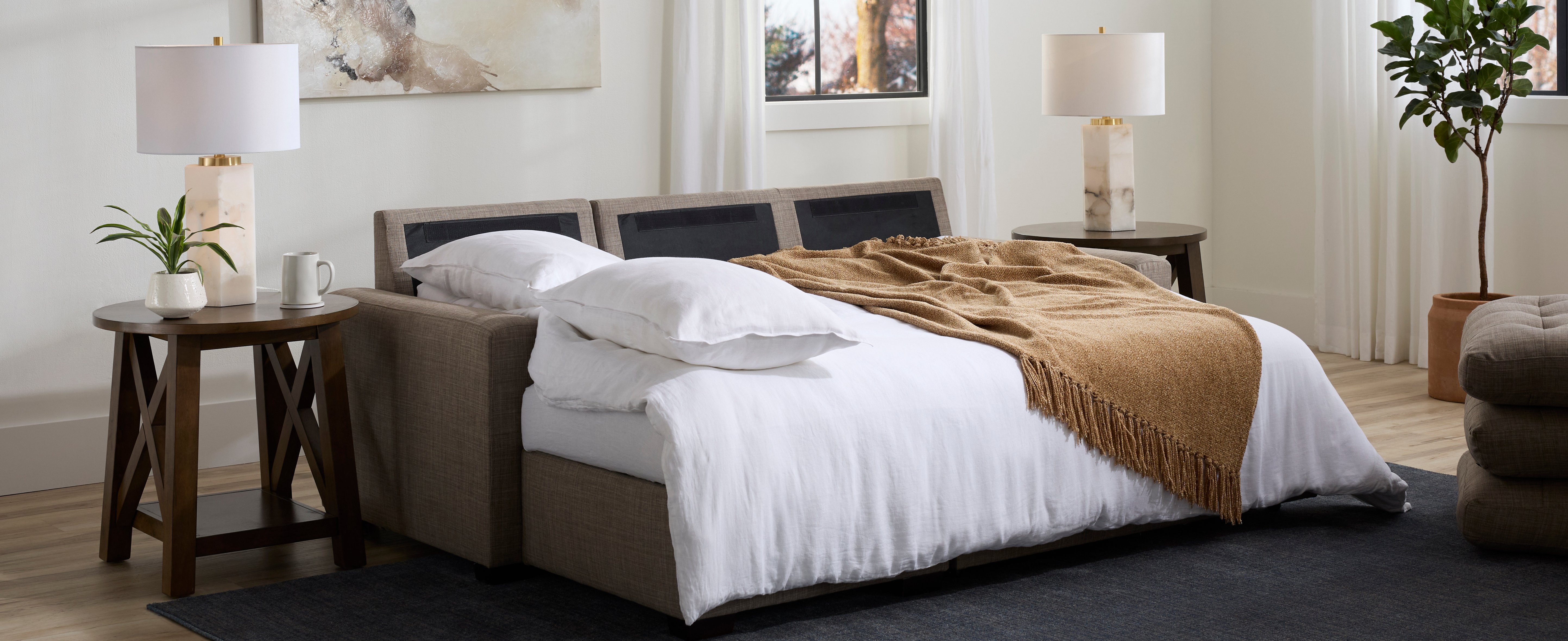
In a small space, it helps when every piece of furniture serves more than one purpose. A sleeper sofa can double as a guest bed. A storage ottoman can hold blankets and remotes (add a tray on top, and it creates a makeshift coffee table). A lift-top coffee table can double as a place to work or eat a meal. A modular sectional breaks into smaller pieces you can rearrange as needed.
Hidden storage is one of your best friends in a small space. Opt for vertical storage, like bookcases, or wall-mounted shelving that doesn’t take up valuable floor space.
The goal of multipurpose furniture is to reduce the number of pieces in the room without reducing function.
Shop the look
Elmdale Table Lamp · California Shag Area Rug · Enbridge Left Arm Facing Dual Power Storage Chaise · Enbridge Right Arm Facing Pop Up Sleeper · Enbridge 2-pc. Sofa Chaise · Emery Coffee Table w/ Casters · Emery End Table · Memphis Arched Glass Door Bookcase
5. Don't Forget the Finishing Touches
One of the biggest considerations to take into account when discussing how to arrange furniture in a small living room is the coffee table. Similar to a rug, a coffee table can help tie the room together – plus, it provides functionality.
If you have just enough room for a coffee table, consider a round one. This allows for easier movement throughout the space and can be pushed up a little closer to the sofa than a traditional rectangular table.
In terms of an area rug, resist the urge to choose a smaller option. Instead, lay down the largest area rug your space can reasonably handle. It will serve as a foundation for the entire room and visually represent the room’s seating area.
Also, use light and mirrors strategically. Avoid putting heavy furniture in front of windows as you’ll want to bring as much natural light into a small space. Place a large mirror opposite a window so it can reflect light back into the space and give the perception of depth.
Small Spaces Reward Thoughtfulness
Arranging a small living room doesn't have to feel constricting! While you may feel compelled to focus all of your creative energy on making it work, try to look at all of the ways it already is working. Add in sophisticated, stained-wood furniture to match the existing wood trim in your home, or choose fabrics in natural earth tones that help accentuate your large windows and the view of the outdoors.
As long as you think strategically about the furniture you layer into the space and how you arrange it to accentuate flow throughout, visitors won't be looking at how small the room is – they'll simply see a welcoming space that feels like home.