'/%3E%3C/svg%3E)
Stability or change? It’s an age-old question that shows up everywhere in our lives, and furniture is no exception.
Fixed furniture is a finished piece – it doesn’t move and isn’t designed to be reconfigured. Modular furniture evolves, changing size and growing over time. Neither is necessarily better; they just serve different purposes.
Here’s how to tell modular and fixed furniture apart, where each type shines, and how to choose the one that fits your home and routine.
Shop the look
What Defines Fixed Furniture?
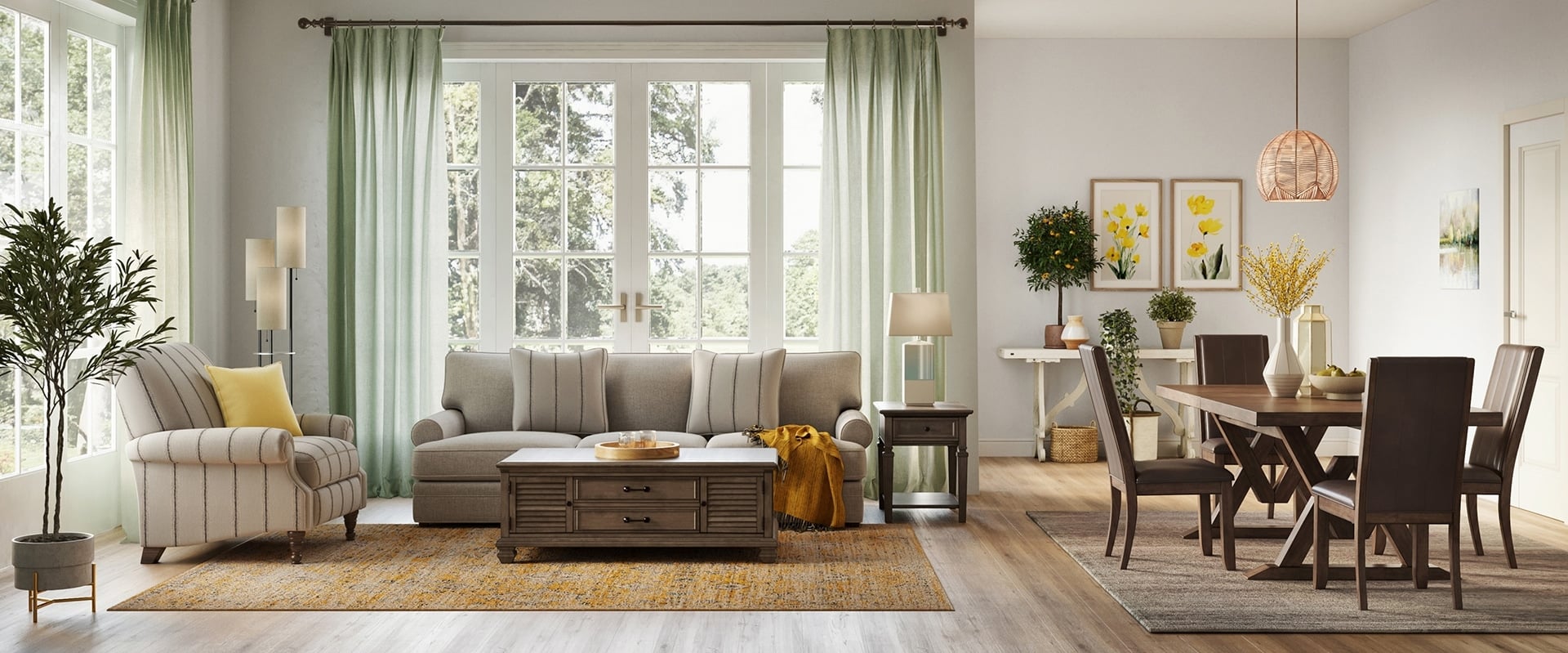
Fixed furniture, also referred to as traditional furniture, is designed to be one single unit and stay as-is. It cannot be rearranged. Picture a standard sofa with a continuous frame, a traditional bed frame with a headboard, and dining tables with set dimensions.
Fixed pieces are stable and permanent. The frames are glued, doweled, stapled, or screwed into a single structure, with upholstery and cushions tailored to the frame.
Fixed furniture has a timeless look – you get what you see. And that permanence isn’t a drawback. With no moving pieces or connectors, fixed pieces can be left alone to serve their main purpose with no adjustments needed.
What Defines Modular Furniture?
Modular furniture consists of individual pieces that connect to form a larger configuration. These pieces can combine, separate, or be rearranged based on your needs. Picture a sectional sofa with separate corner, chaise, and armless seats that can connect to form a single L- or U-shaped sofa. Other examples of modular furniture include outdoor sofas, bookcases, and desks.
Modular pieces stay connected via metal brackets, locking clips, hidden latches, or slide-and-lock rails. Some designs let you swap left- and right-facing orientations, move a chaise, or add an extra seat at a later point in time. Shelving can also use pegs to adjust heights easily.
Shop the look
Raywick Table Lamp · Strong Coalition Wall Art · ModularOne Ottoman · ModularOne Swivel Chair · ModularOne 8-pc. Sectional w/One Power Console · Emmett Floor Lamp
Modular furniture is flexible and adjusts to new homes and growing families. It can also be a space-saver, helping fill in tight corners and awkward spaces. And since it’s made of smaller, individual units, moving a modular sofa or sectional is a lot easier than a fixed one.
Learn more in our guide to modular furniture.
Modular vs. Fixed Furniture: Key Differences at a Glance
Factor | Fixed | Modular |
Configuration | One permanent shape and size | Can be rearranged into multiple layouts |
Best For | Established spaces and defined layouts | Changing spaces and evolving daily life |
Flexibility | Size is fixed at purchase; one consistent piece | Easily add or remove units |
Durability | Continuous frame with strong joinery increases sturdiness | Sturdy when well-made; can swap out a single unit instead of replacing the entire piece |
Look | Traditional and cohesive | Adaptable and segmented |
Who Benefits Most From Fixed Furniture?
Fixed furniture is a good choice if your home and your needs are already defined. It makes the most sense for:
- Rooms with a clear purpose: Spaces like a formal dining room or a primary bedroom benefit from furniture that is permanent and built for one job.
- Homeowners who are settled in: If you’ve established a long-term layout in your home, you may prioritize quality and permanence over flexibility.
- A more traditional design aesthetic: Fixed pieces tend to be more cohesive and tailored than modular shapes.
- Individuals who value simplicity: Fixed furniture has no connectors or configurations to worry about. It’s just furniture that looks the same day after day.
Who Benefits Most From Modular Furniture?
Modular furniture is a terrific option if your lifestyle isn’t static and you need furniture to adapt to your changing needs. It makes the most sense for:
- Individuals who rent or don’t know how long they’ll be in their home: Modular pieces break down and are easy to move, either from room to room or home to home.
- Households that are growing or shrinking: Whether it’s a new baby or an empty nest, modular seating can expand or contract based on the number of people in your home.
- Individuals who entertain regularly: Splitting a sectional into two separate seating areas for a party is exactly what modular furniture is designed for.
- Open floor plans and oddly-shaped rooms: These types of spaces will benefit from furniture that can change shape.
Shop the look
Sonny Morning Light II Wall Art · Sonny Morning Light I Wall Art · Tulum Area Rug · Artemis II Ottoman · Artemis II 4-pc. Sectional · Vern Round End Table
How to Choose Between Modular & Fixed Furniture
Picture how you currently live day to day, and how you plan to live over the next few years. Are you furnishing a space for right now, or looking to build a setup over time? Are you looking to set it and forget it, or do you need a room that flexes with your life?
Fixed furniture is stable and anchors a room with a timeless presence. Modular furniture gives you the freedom to reconfigure and expand as you see fit. There’s no wrong answer; just the right fit. Look for a piece that suits your space, your life today, and still makes sense down the road.
Modular vs. Fixed Furniture FAQs
Is modular furniture less durable than fixed furniture?
No. Quality modular furniture uses the same frame and cushion construction as fixed pieces. The connectors are designed to hold up through multiple reconfigurations.
Can I mix modular and fixed furniture in the same room?
Of course! A modular sectional complemented by a fixed loveseat, accent chair, or coffee table is a natural pairing. The two furniture types work well together as long as they fit your overall style and suit your specific lifestyle needs.
Does fixed furniture mean I can’t rearrange my room?
Fixed furniture doesn’t change shape, but that doesn’t mean you can’t move it around to fine-tune your layout. The piece itself is “fixed,” but its location can change depending on your preference.
Is modular or fixed furniture better for small spaces?
Modular furniture typically has the edge in small spaces, as it can be rearranged to fit small or irregularly-shaped footprints. With that said, fixed furniture comes in a wide selection of shapes and sizes, so it can work equally well; you just have to measure carefully before purchasing.